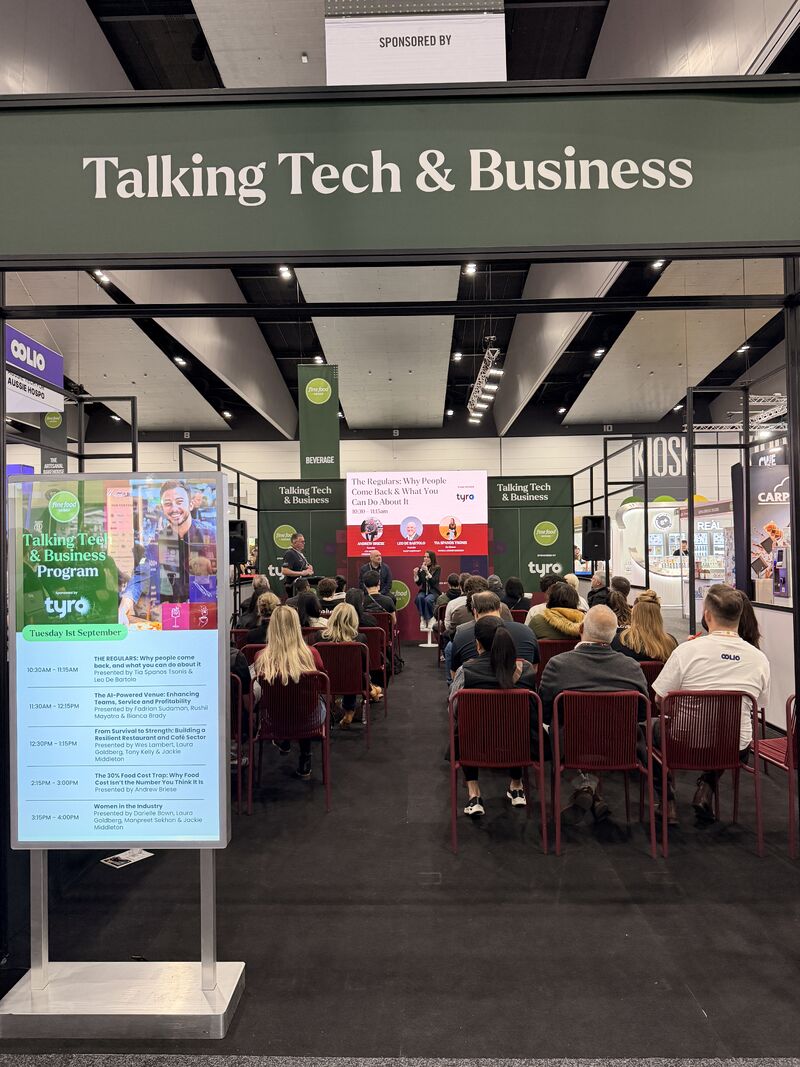
A couple of weeks ago I had the opportunity to join a panel at Fine Food Australia called “The Regulars: Why People Come Back, and What You Can Do About It.”
It was a subject I loved talking about because, after more than 25 years in hospitality, I still think we sometimes make customer experience far more complicated than it needs to be. We talk about loyalty programs, marketing, menu innovation, technology, data and customer acquisition. They all have a place, but underneath all of it is a much simpler question: why does someone choose to come back to your venue when they could go somewhere else?
I started thinking about that question before the panel, because I was sharing the stage with Tia, one of the owners of Vanilla. For those not in the know, Vanilla has become something of an institution in Melbourne’s south-east, and my mum has been going there for more than 10 years.
So before the panel, I asked Mum a really simple question: “Why do you keep going back?”
There are plenty of other cafés and restaurants she could choose from, but Vanilla has remained part of her routine for years. When we talked about why, her answer really came down to three things: routine, comfort and recognition.
I loved that answer because there was nothing complicated about it. She didn’t talk about loyalty points, marketing campaigns or the latest technology. She talked about how the place made her feel.
People want to feel recognised
Recognition doesn’t have to mean knowing every customer’s life story or having a sophisticated CRM system. Sometimes it is simply knowing someone’s name, remembering their usual coffee, asking how something went that they mentioned last time, or just acknowledging that you’ve seen them before.
Those little moments matter.
One of the points I made during the panel was that, particularly in hospitality, we shouldn’t underestimate the impact a small interaction can have. I spent a long time working in the UK, where the local pub really reinforced this for me. For some people, the conversation they have with the person behind the bar might genuinely be one of the better interactions they have that day. That’s hospitality. It isn’t just carrying a plate from the kitchen to a table.
The best venues create a sense that “you belong here.” And when customers feel that, coming back becomes easy.
Consistency is probably more important than constantly trying to be different
We all want to innovate. We want a new menu, a new promotion, a new concept or something exciting to talk about. But sometimes the customer just wants the thing they loved last Tuesday to still be good this Tuesday.
Consistency isn’t particularly glamorous, but it builds businesses.
It is the same welcome. The venue is clean. The food comes out the way it should. The music, lighting and temperature feel right. The team looks organised rather than frantic. What you promised on Instagram resembles what the customer actually experiences when they walk through the door.
Even atmosphere is often the result of a hundred small operational decisions. Music. Lighting. Smell. Temperature. Cleanliness. How the tables are set up. Whether the team appears calm and in control. None of those things on their own necessarily create loyalty, but together they create the feeling a customer remembers.
And there’s another trap here. Sometimes we change things because we’re bored with them, not because our customers are. If something is loved, selling well and part of the reason people visit you, be careful before taking it away simply because the internal team wants something new.
Regulars can’t belong to one great employee
Another discussion on the panel was around staff turnover and what happens when the person who “knows all the regulars” leaves.
If all of your customer relationships sit with one manager, one barista or one brilliant front-of-house person, that’s a risk.
The strongest operators somehow make that warmth transferable. They create a culture where remembering people, recognising regulars and having conversations isn’t just the personality of one employee; it is simply how the venue operates. That comes through recruitment, leadership, training and the standards you reinforce every day.
Systems matter here too. Hospitality should feel human, but that doesn’t mean we can’t use information intelligently behind the scenes.
Technology should help us be more hospitable, not less
This is where I think hospitality has a huge opportunity.
A customer can visit a venue 30 times and, in many businesses, remain completely anonymous. We might know what they purchased through the POS, but we don’t necessarily know who they are, how frequently they visit, what they like or why they suddenly stopped coming.
That’s a lot of useful information disappearing out the door.
I joked during the discussion that the traditional paper punch card is a perfect example. The customer gets their tenth coffee free, which is great, but the business may still know absolutely nothing about them. We’ve rewarded loyalty without actually learning anything from it.
Used properly, technology allows us to turn anonymous visitors into known customers. It can help us understand frequency, preferences and behaviour, and give us an appropriate way to reconnect. But the technology isn’t the relationship. It should simply make the relationship easier.
No app is going to rescue bad food, inconsistent service or a team that doesn’t care.
We spend a lot of money finding customers. We should work harder to keep them.
Hospitality businesses understandably spend a huge amount of time thinking about acquisition. How do we get more people through the door? More followers? More Google searches? More bookings? More reach?
We absolutely need new customers. But I think the more valuable question once someone walks through the door is: what are we doing to make sure they want to come back?
Retention compounds. One good experience creates another visit. Another visit creates familiarity. Familiarity creates trust. Trust creates a regular. And regulars don’t just spend money themselves; they bring friends, recommend you and become part of the atmosphere of the venue.
That’s why guest experience shouldn’t sit in a marketing plan or a once-a-year training session. It lives in operations every single day.
After the Fine Food discussion, I kept coming back to Mum’s answer.
Routine. Comfort. Recognition.
Perhaps that’s the test.
If you’re running a hospitality business, ask yourself: does my venue make it easy for somebody to build a routine with us? Do they feel comfortable when they’re here? And when they come back, do we recognise them?
Get those things right consistently and you probably won’t need to convince people to be loyal.
They’ll simply want to come back.